
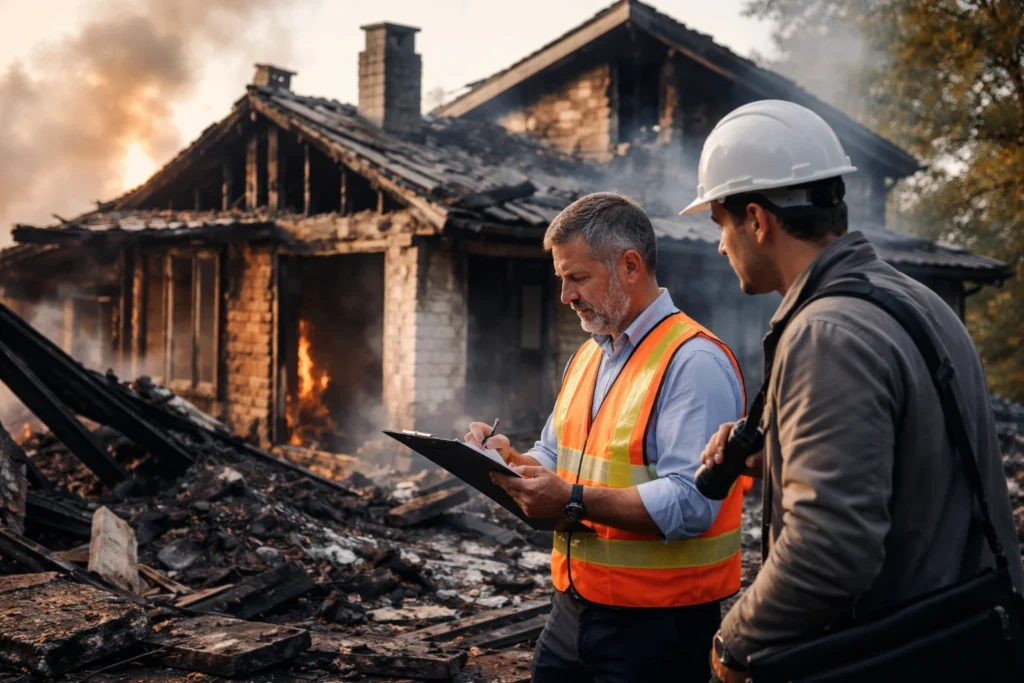
A house fire doesn’t just damage walls and furniture it disrupts your entire life. In a matter of minutes, everything you’ve built can feel uncertain. The smoke, the water, the chaos… it’s overwhelming. And right in the middle of it all, you’ll likely hear from a fire insurance adjuster. That moment matters more than most homeowners realize.
Because the way your claim is handled from the very first inspection to the final settlement can determine whether you recover fully or fall short financially. I’ve seen both outcomes. And the difference usually comes down to understanding how the process works and who is really representing your interests. Let’s break it down clearly. No fluff. Just what you need to know to protect your claim.
What Is a Fire Insurance Adjuster?
A fire insurance adjuster is the professional responsible for evaluating your insurance claim after fire damage. Their job is to inspect the property, assess losses, and estimate how much the insurance company should pay. Sounds straightforward. But here’s the catch who they work for matters.
At a high level, a fire insurance adjuster will:
- Inspect structural and visible damage
- Document losses and gather evidence
- Estimate repair or replacement costs
- Apply your policy coverage to the damages
- Recommend a settlement amount
That recommendation? It directly impacts your payout. And not all damage is obvious. Smoke can seep into walls. Heat can weaken structural components. Water used to extinguish the fire can create additional hidden issues. A skilled fire insurance adjuster should catch these but not all do. Interestingly, the spread of fire and smoke in enclosed structures can behave unpredictably due to airflow dynamics sometimes resembling complex patterns studied in fields like turbulence, where chaotic movement makes damage harder to fully assess at first glance.
The Three Types of Fire Insurance Adjusters
Not every adjuster is on your side. Let’s clarify who’s who.
1. Company Adjuster
- Employed directly by the insurance company
- Represents the insurer’s financial interests
- Works within company guidelines and cost controls
2. Independent Adjuster
- Hired by insurance companies on a contract basis
- Often used during large-scale disasters
- Still represents the insurer, not you
3. Public Adjuster
- Hired by the policyholder (you)
- Advocates for your best interest
- Focuses on maximizing your claim settlement
Here’s a quick comparison:
| Type of Adjuster | Works For | Primary Goal |
| Company Adjuster | Insurance Company | Protect insurer payout |
| Independent Adjuster | Insurance Company | Process claims efficiently |
| Public Adjuster | You (Policyholder) | Maximize your settlement |
Step-by-Step: How the Fire Claim Process Works
Understanding the process puts you in control. Here’s how a typical fire claim unfolds.
1. Filing the Claim
You notify your insurance company after the fire. Timing matters do this as soon as possible.
2. Initial Contact
A fire insurance adjuster reaches out to schedule an inspection. This is your first interaction, and it sets the tone.
3. Property Inspection
The adjuster evaluates:
- Structural damage
- Smoke and soot impact
- Water damage
- Personal belongings
They document everything. Or at least, they should.
4. Estimation
They calculate the cost to repair or replace damaged items. This includes labor, materials, and sometimes depreciation.
5. Settlement Offer
You receive a payout estimate. This is where many homeowners pause and for good reason. Because the first offer is not always the best one.
What Adjusters Look for During Inspection

A thorough inspection is critical. Here’s what a fire insurance adjuster should evaluate:
- Structural Damage: Roof, walls, foundation integrity
- Smoke & Soot: Lingering contamination that affects air quality and surfaces
- Water Damage: From firefighting efforts
- Electrical Systems: Often compromised even if not visibly damaged
- Personal Property: Furniture, appliances, clothing
- Code Compliance: Upgrades required to meet current building codes
Miss something here and it could cost you thousands.
The Hidden Challenges in Fire Insurance Claims
This is where things get tricky. Not all claims are handled equally. And not all damage is accounted for.
Here are common issues homeowners face:
- Undervalued Estimates
- Missed Damage
- Policy Complexity
- Depreciation Confusion
- Delays
A fire insurance adjuster might not intentionally overlook these but the system isn’t always designed to maximize your recovery.
Fire Insurance Adjuster vs Public Adjuster: What’s the Difference?
Let’s be direct. One works for the insurance company. The other works for you. A fire insurance adjuster assigned by your insurer is evaluating your claim within company guidelines. A public adjuster evaluates it independently with your financial recovery in mind.
Real-World Example: A League City Scenario
Imagine this. A homeowner in League City experiences a kitchen fire. The insurance company sends a fire insurance adjuster, who estimates the damage at $45,000. But after hiring a public adjuster, additional hidden issues are uncovered. The final settlement rises significantly. Same property. Different outcome.
Why Hiring a Public Adjuster After a Fire Can Be a Game-Changer
- Detailed documentation
- Stronger negotiation
- Less stress for you
- Higher settlement potential
A public adjuster works to balance the process when dealing with a fire insurance adjuster assigned by the insurer.
When Should You Call a Fire Insurance Adjuster (Public Adjuster)?
- Immediately after the fire
- When your claim feels delayed
- When the offer seems low
- When damages are complex
How to Choose the Right Fire Insurance Adjuster in League City

Look for:
- Proper licensing
- Fire claim experience
- Transparent fees
- Local knowledge
- Strong communication
Red Flags to Watch Out For
- Unrealistic promises
- Poor communication
- No clear process
- Lack of local presence
Tips to Protect Your Fire Insurance Claim
- Document everything
- Keep damaged items
- Save receipts
- Review your policy
- Don’t rush decisions
Common Mistakes Homeowners Make After a Fire
- Accepting the first offer
- Missing hidden damage
- Not asking questions
- Handling everything alone
Understanding Your Fire Insurance Policy (Simplified)
- Dwelling coverage
- Personal property
- Additional living expenses
- Replacement cost vs actual cash value
- Deductibles and limits
Final Thoughts: Take Control of Your Fire Claim
A fire changes everything. Fast. But your recovery doesn’t have to be uncertain. Understanding the role of a fire insurance adjuster gives you leverage. Taking action gives you control. And making informed decisions ensures you don’t leave money on the table. Because this isn’t just about a claim. It’s about rebuilding your life fully, fairly, and without compromise.
FAQs
A fire insurance adjuster evaluates fire damage, documents losses, and determines how much your insurance company should pay for your claim.
Most fire insurance adjusters work for the insurance company, while a public adjuster works directly for you, the policyholder.
You can rely on their process, but it’s wise to review everything carefully since they represent the insurer’s interests.
You should consider hiring one immediately after a fire or if your claim is large, delayed, or underpaid.
Yes, a public adjuster can often uncover overlooked damages and negotiate a higher settlement on your behalf.
Claims typically include structural damage, smoke and soot damage, water damage, and personal property losses.
It can take weeks to months depending on the complexity of the damage, documentation, and negotiation process.
Ensure safety first, document all damage with photos, notify your insurer, and avoid discarding damaged items.
Yes, you can negotiate or bring in a public adjuster to advocate for a more accurate and fair settlement.
You can dispute the decision, provide additional documentation, or hire a public adjuster to reopen and negotiate your claim.