
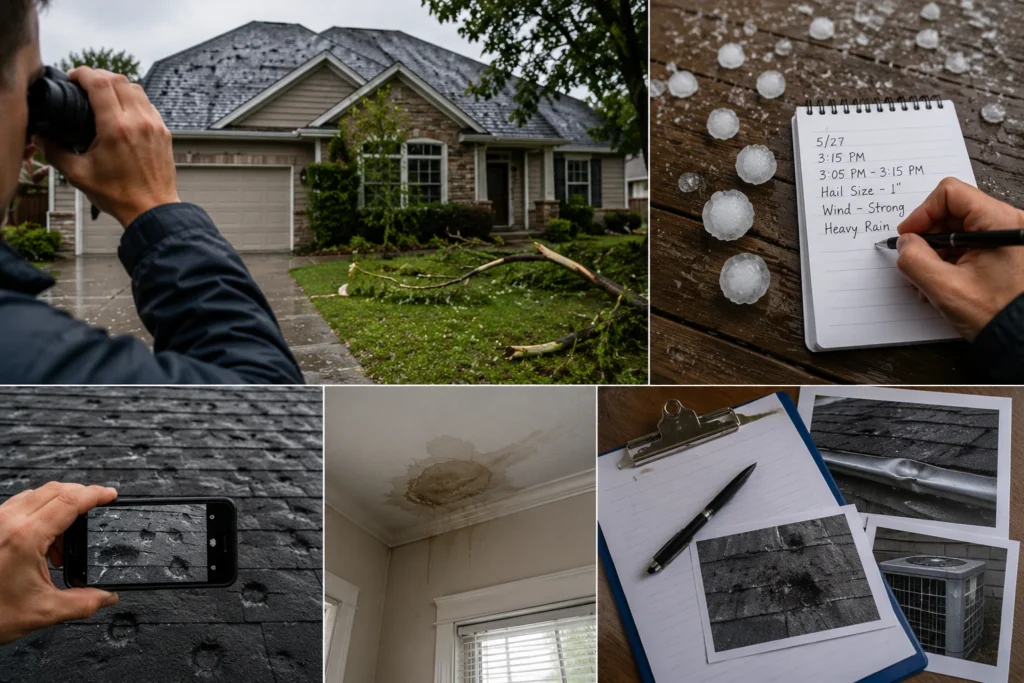
A hailstorm can last only a few minutes, yet the damage it leaves behind can affect your home for years. That’s why knowing how to document hail damage for an insurance claim is one of the most valuable skills a homeowner can have. The quality of your documentation often determines how clearly the damage is understood and how effectively your claim moves through the insurance process. Many homeowners assume that visible dents or broken shingles automatically result in a straightforward claim.
Unfortunately, it rarely works that way. Insurance companies evaluate evidence. They review photographs, inspection reports, weather data, repair estimates, and other documentation before determining the scope of covered damage. The stronger your evidence, the stronger your position becomes.
If you live in League City, severe weather is simply part of life. Gulf Coast storms can bring high winds, hail, torrential rain, and sudden roof damage that isn’t always obvious from the ground. Acting quickly and documenting thoroughly can make a significant difference. This guide walks through the entire process step by step. By the end, you’ll know exactly what to document, how to organize your records, and how to create a complete claim file that accurately reflects the condition of your property.
Understanding Why Documentation Matters
Many homeowners focus exclusively on finding damage. That’s only half the battle. The other half involves proving the damage existed, showing when it occurred, and demonstrating how it affects the property. Insurance adjusters were not present during the storm. They rely on documentation to reconstruct what happened. Think of your evidence as a story. Every photo, video, inspection report, and receipt helps tell that story. Without enough evidence, gaps begin to appear.
Those gaps can create questions such as:
- Was the damage caused by hail?
- Did it exist before the storm?
- How extensive is the damage?
- Does it affect multiple areas of the property?
- Are repairs actually necessary?
Strong documentation answers those questions before they become problems. This is especially true when preparing a Hail Damage Roof Insurance Claim, where insurers often rely heavily on photographs, inspection reports, weather records, and other evidence to evaluate the scope and cause of the damage.
Common Reasons Hail Claims Face Challenges
Several issues frequently complicate hail claims.
| Issue | Potential Impact |
| Delayed reporting | Evidence becomes harder to verify |
| Limited photographs | Damage may appear less severe |
| Missing inspection reports | Hidden damage goes undocumented |
| Poor record keeping | Important details get lost |
| Repairs completed too soon | Original damage becomes difficult to prove |
Documentation helps eliminate uncertainty. The more complete your records are, the easier it becomes to demonstrate the true scope of damage.
Step 1: Stay Safe Before Inspecting Your Property
Before taking a single photograph, focus on safety. This sounds obvious. Yet every year homeowners climb damaged roofs immediately after storms and put themselves at risk.
Hailstorms often leave behind:
- Wet surfaces
- Loose shingles
- Broken tree limbs
- Exposed electrical components
- Structural weaknesses
Avoid climbing onto the roof unless you have proper safety equipment and experience. Instead, begin with ground-level observations. Use binoculars if necessary. A safer inspection is always better than an emergency room visit.
Warning Signs That Require Professional Help
Contact a qualified roofing professional if you notice:
- Sagging roof sections
- Large punctures
- Significant water intrusion
- Structural movement
- Fallen power lines nearby
There is no benefit to risking injury. Your claim can wait. Your safety cannot.
Step 2: Document the Storm Itself
Many homeowners document damage. Fewer document the storm. That is a mistake. Storm evidence can strengthen the overall claim file by connecting the damage to a specific weather event. Start recording information immediately.
Create a Storm Record
Write down:
- Date of the storm
- Approximate start time
- Approximate end time
- Estimated hail size
- Wind conditions
- Rain intensity
Even simple notes can become valuable later.
Photograph Hailstones
If hail remains on the ground, photograph it. Use a measuring tool for scale.
Examples include:
- Coins
- Measuring tape
- Ruler
- Common household objects
Size matters. Larger hail generally produces more significant damage patterns.
Save Weather Reports
Collect weather documentation from trusted sources.
Helpful records include:
- National Weather Service reports
- Local weather station data
- Storm tracking information
- Hail maps
Weather records help establish that severe hail occurred in your area during a specific timeframe.
Step 3: Take Comprehensive Exterior Photos
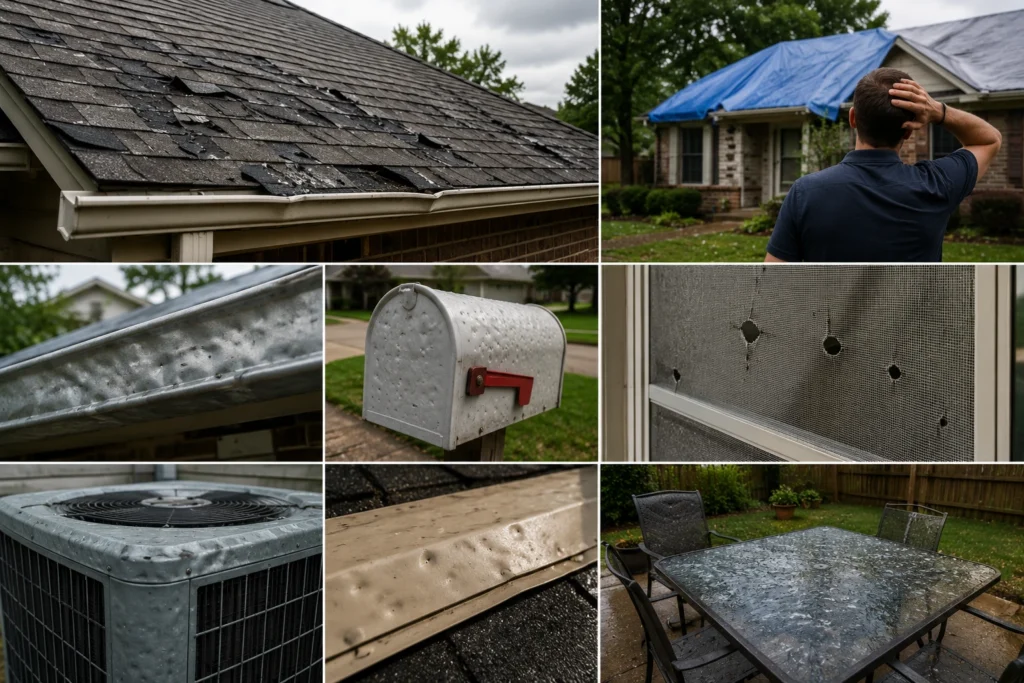
Photographs often become the foundation of a hail claim. Don’t rush. Take far more photos than you think you’ll need. Digital storage is cheap. Missing evidence can be expensive.
Start With Wide-Angle Photos
Begin by photographing the entire property.
Capture:
- Front elevation
- Rear elevation
- Left side
- Right side
- Roofline views
These images provide context. They show the overall condition of the property immediately after the storm.
Photograph the Roof
Roof damage receives significant attention during hail claims.
Look for signs such as:
- Missing shingles
- Cracked shingles
- Bruising
- Granule loss
- Exposed matting
- Impact marks
Take both close-up and wide-angle photos. Multiple angles help reveal damage patterns.
Inspect Metal Components
Metal surfaces often provide some of the clearest evidence of hail impacts.
Photograph:
- Gutters
- Downspouts
- Roof vents
- Flashing
- Metal trim
- HVAC units
Dents on soft metals can help demonstrate hail size and storm severity.
Inspect Other Exterior Areas
Hail damage isn’t limited to roofing materials.
Document:
- Siding
- Window frames
- Screens
- Garage doors
- Entry doors
- Deck railings
- Exterior lighting
These impacted surfaces can help demonstrate how widespread the storm damage was across the property.
Don’t Forget Secondary Structures
Many homeowners overlook detached property features.
Document:
- Fences
- Sheds
- Gazebos
- Outdoor kitchens
- Pool equipment
- Detached garages
Every damaged structure should become part of the claim record.
Best Practices for Claim Photography
Use this checklist:
✓ Photograph every damaged area
✓ Take multiple angles
✓ Include wide and close views
✓ Use natural lighting when possible
✓ Enable timestamps
✓ Avoid blurry images
✓ Back up photos immediately
The goal is simple. Create a visual record so complete that someone reviewing it later can understand exactly what happened.
Step 4: Create Video Documentation
Photos are powerful. Video adds another layer. A continuous video walkthrough provides context that still images sometimes miss.
Why Video Helps
Video captures:
- Property layout
- Damage locations
- Relative distances
- Scale
- Overall conditions
It creates a virtual tour of the damage.
Conduct a Property Walkthrough
Start at the street. Move slowly around the home. Narrate what you’re seeing.
Mention:
- Date
- Storm date
- Location of damage
- Visible impacts
Keep the video steady and organized. There is no need for professional production quality. Clear documentation matters more than cinematic footage.
Include Close-Up Video of Damage
As you move through the property, stop briefly at areas that show visible impacts.
Focus on:
- Dented gutters
- Damaged shingles
- Cracked vents
- Window screen damage
- Air conditioning units
Short clips can provide details that are difficult to capture in photographs alone.
Step 5: Check for Interior Signs of Hail Damage
Many homeowners think hail damage stops at the roof. Not always. Roof impacts can create pathways for water intrusion. Sometimes those problems remain hidden for weeks.
Inspect the Attic
Bring a flashlight. Look carefully. Signs of trouble include:
- Water stains
- Damp insulation
- Mold growth
- Darkened wood
- Dripping moisture
Photograph everything. Even minor staining deserves documentation.
Examine Ceilings and Walls
Pay attention to:
- Brown stains
- Paint bubbling
- Peeling drywall
- Ceiling discoloration
- Soft wall surfaces
These issues may indicate water infiltration connected to storm damage.
Check Flooring
Water often travels.
Inspect:
- Hardwood floors
- Carpet edges
- Baseboards
- Tile grout lines
Small changes can signal larger underlying problems.
Document Odors and Humidity Changes
Sometimes damage appears through changes in indoor conditions.
Take notes if you notice:
- Musty smells
- Increased humidity
- Damp air
- New mold growth
While these issues may not be visible in photos, they should still be included in your written records.
Step 6: Create a Detailed Damage Log
Photos show damage. Written notes provide context. Combining both creates stronger evidence. Good recordkeeping often relies on maintaining a clear chronology of events, inspections, photographs, and communications. Understanding the concept of chronology can help homeowners organize evidence more effectively throughout the insurance claim process.
Build a Property Damage Journal
For every damaged area record:
| Item | Description |
| Location | Where damage appears |
| Date observed | When damage was discovered |
| Condition | Detailed description |
| Severity | Minor, moderate, severe |
| Supporting photos | File names or references |
Organization saves time later. And insurance claims often involve a lot of information.
Track Every Conversation
Maintain records of:
- Phone calls
- Emails
- Inspections
- Claim updates
- Repair discussions
Include names, dates, and summaries. Small details become surprisingly important as claims progress.
Step 7: Preserve Physical Evidence
Sometimes physical evidence speaks louder than photographs. If damaged materials become detached naturally, save them whenever practical.
Examples include:
- Broken shingles
- Damaged screens
- Vent components
- Metal fragments
Label each item clearly.
Include:
- Date collected
- Location found
- Description
Store them safely until claim evaluations are complete. Physical evidence can help verify impact damage and support inspection findings.
Step 8: Obtain a Professional Inspection Report
Even diligent homeowners can miss important damage. That’s normal. Some hail impacts are subtle. Others occur in areas difficult to access. A professional inspection provides another level of documentation.
What a Quality Inspection Includes
A thorough inspection should contain:
- Detailed observations
- Roof measurements
- Damage locations
- Photographic evidence
- Repair recommendations
- Supporting notes
Good reports leave little room for guesswork.
Hidden Damage Professionals Often Discover
Examples include:
- Soft metal impacts
- Damaged flashing
- Vent deterioration
- Underlayment issues
- Moisture penetration
- Shingle bruising
These conditions may not be obvious during a basic visual review.
Why Independent Documentation Matters
Independent inspections often provide additional perspectives regarding the extent of damage. The goal is not to create conflict. The goal is accuracy. Multiple sources of documentation can help ensure that all storm-related damage is properly identified and recorded.
Organizing Your Insurance Claim File
Once documentation begins, information accumulates quickly. Very quickly. Without organization, important records become difficult to locate.
Create a dedicated claim folder containing:
- Photos
- Videos
- Inspection reports
- Weather records
- Repair estimates
- Correspondence
- Insurance documents
Both digital and physical copies are helpful. Redundancy is your friend when managing insurance documentation.
Create separate folders for:
- Exterior Damage
- Interior Damage
- Contractor Reports
- Insurance Communications
- Estimates and Invoices
- Supplemental Findings
The more organized your records become today, the easier the claim process can be tomorrow.
Common Documentation Mistakes That Can Hurt a Claim
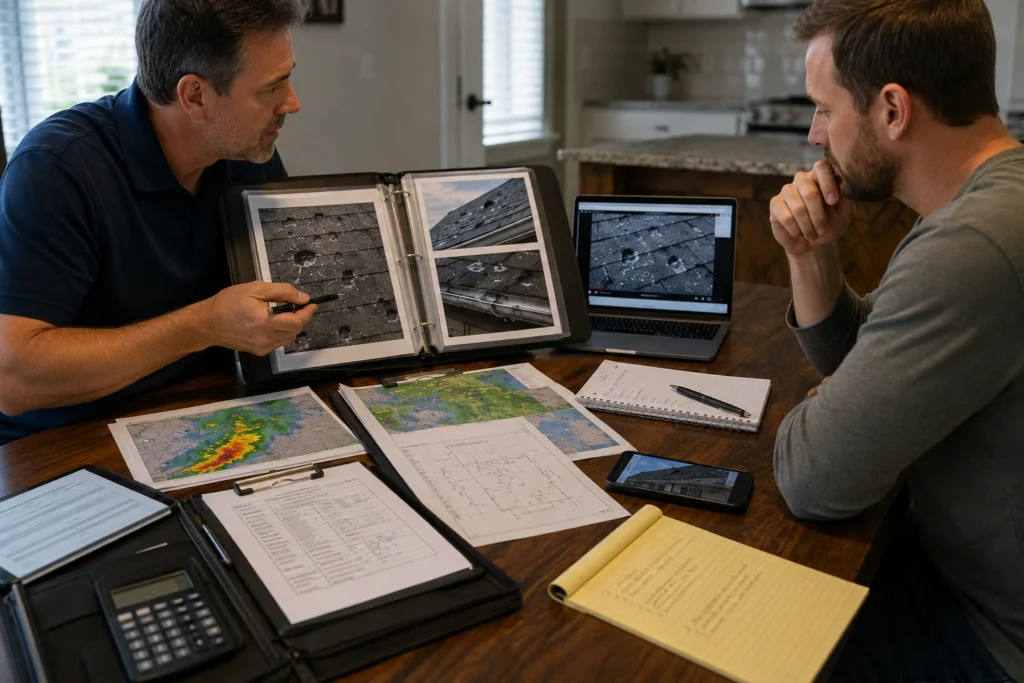
Even homeowners who act quickly can unintentionally weaken their claim. I have seen situations where substantial damage existed, yet poor documentation created unnecessary challenges. The good news? Most of these mistakes are entirely avoidable.
Waiting Too Long to Document Damage
Time matters. A lot. The longer you wait, the greater the chance that evidence changes or disappears. Wind can remove damaged shingles. Rain can wash away signs of impact. Temporary repairs can alter conditions. Neighbors may even begin cleanup efforts that affect surrounding evidence. Document everything as soon as conditions are safe.
Taking Too Few Photos
One photo rarely tells the full story. Five photos are better. Fifty may be even better. Insurance claims often involve multiple reviewers. Some may never visit the property in person. Your photographs become their eyes. Capture every damaged area from several perspectives.
Ignoring Minor Damage
Small dents often reveal big problems.
Many homeowners focus only on obvious roof damage and overlook:
- Gutters
- Mailboxes
- Window screens
- Air conditioning units
- Metal flashing
- Outdoor furniture
Minor impacts help establish the overall severity of the storm. They support the larger narrative of widespread hail activity.
Making Permanent Repairs Too Soon
Protecting your property is important. Removing evidence is not. Emergency mitigation may be necessary to prevent further damage. However, permanent repairs should generally wait until inspections and documentation are completed. Always photograph conditions thoroughly before repairs begin.
Losing Records
Insurance claims often last weeks or months. Documents accumulate quickly. Repair estimates. Emails. Inspection reports. Photographs. Invoices. Without organization, valuable evidence can disappear into a sea of paperwork. Keep everything in one dedicated claim file.
Preparing for the Insurance Adjuster’s Visit
Eventually, your insurance company will schedule an inspection. Preparation matters. This meeting is an opportunity to present the evidence you have gathered.
Organize Your Documentation Before the Visit
Have the following ready:
| Documentation | Purpose |
| Photos | Show visible damage |
| Videos | Provide context |
| Weather reports | Verify storm conditions |
| Inspection reports | Identify hidden damage |
| Damage log | Create timeline |
| Repair estimates | Establish repair needs |
The easier you make information accessible, the smoother the inspection process often becomes.
Walk the Property Before the Inspection
Refresh your memory.
Review:
- Damage locations
- Inspection findings
- Areas of concern
- Photographic evidence
Being familiar with the details allows you to answer questions confidently.
Ask Questions
Inspections should not be one-sided conversations.
Ask questions such as:
- Which areas are being inspected?
- What damage is being documented?
- Are photographs being taken?
- Are all elevations being reviewed?
- Will additional inspections be necessary?
The more informed you are, the more effectively you can participate in the process.
Compare Findings With Your Documentation
After the inspection, compare the findings to your records. Look for differences. Pay attention if significant damage documented in your photos or inspection reports does not appear in the adjuster’s observations. Discrepancies do not automatically mean something is wrong. However, they deserve attention.
When Documentation Reveals a Larger Problem
Not all hail damage becomes apparent immediately. In many cases, additional issues emerge during repairs. This is surprisingly common.
Hidden Damage Can Surface Later
Roofing contractors sometimes discover:
- Damaged underlayment
- Water intrusion
- Compromised decking
- Flashing failures
- Vent damage
These conditions may not have been visible during the initial inspection.
Continue Documenting New Findings
The documentation process should not stop after the claim is filed.
Continue taking photographs if:
- Additional damage is discovered
- Repairs expose hidden conditions
- Water intrusion worsens
- Structural concerns emerge
New evidence can become critical if claim updates become necessary.
Supplemental Claims May Be Necessary
A supplemental claim involves additional damage identified after the original claim evaluation. Proper documentation remains essential.
Document:
- Newly discovered damage
- Contractor findings
- Repair recommendations
- Additional costs
Detailed records help support supplemental requests.
Hail Damage Documentation Checklist
When storms hit, emotions often take over. A checklist keeps you focused.
Immediately After the Storm
✓ Ensure personal safety
✓ Assess the property from the ground
✓ Photograph hailstones
✓ Record storm details
✓ Save weather information
✓ Take exterior photographs
✓ Begin video documentation
Within the First Few Days
✓ Inspect the attic
✓ Check ceilings and walls
✓ Document water intrusion
✓ Contact a qualified inspector
✓ Create a damage log
✓ Notify your insurance company
During the Claim Process
✓ Save all correspondence
✓ Organize estimates
✓ Preserve physical evidence
✓ Continue taking photographs
✓ Attend inspections
✓ Track repair discussions
Before Repairs Begin
✓ Confirm documentation is complete
✓ Save contractor reports
✓ Back up digital files
✓ Verify all damage has been recorded
A systematic approach reduces mistakes and strengthens your overall claim file.
Why Thorough Documentation Protects Your Investment
Your home represents more than a building. It represents years of investment, memories, and financial planning. That’s why thorough documentation matters so much.
When damage is properly recorded:
- Repairs can be evaluated accurately
- Hidden issues are easier to identify
- Communication becomes more effective
- Evidence remains available months later
- Claim decisions rely on facts rather than assumptions
Strong documentation benefits everyone involved. The insurance company receives clearer information. Contractors gain a better understanding of repair needs. Homeowners gain confidence knowing they have preserved important evidence.
Why Hail Damage Claims Are Especially Important in League City
Homeowners in League City understand how quickly weather conditions can change. A sunny afternoon can become a severe storm warning within hours.
The Gulf Coast regularly experiences:
- Intense thunderstorms
- Strong wind events
- Heavy rainfall
- Hail-producing systems
These conditions create ongoing risks for residential roofing systems.
Coastal Conditions Can Complicate Damage Assessments
Hail rarely acts alone.
Storms often bring a combination of:
- Wind damage
- Water intrusion
- Flying debris
- Impact damage
As a result, documentation becomes even more important. Photos, videos, weather records, and professional inspections help distinguish storm-related damage from ordinary aging.
Early Documentation Preserves Critical Evidence
The Gulf Coast environment can accelerate deterioration. Heat. Humidity. Rain. Strong sunlight. All of these factors can alter damage conditions over time. The sooner evidence is gathered, the more accurately it reflects the property’s condition following the storm. For many homeowners in League City, prompt documentation becomes one of the most effective ways to protect their interests during the claim process.
Frequently Overlooked Areas During Hail Documentation
Even thorough inspections can miss certain locations. Take extra time to evaluate these commonly overlooked areas:
Roof Accessories
Inspect:
- Satellite dishes
- Solar panels
- Exhaust caps
- Skylights
- Antennas
Exterior Fixtures
Review:
- Lighting fixtures
- Security cameras
- Decorative metalwork
- Mailboxes
- Exterior vents
Outdoor Living Spaces
Don’t forget:
- Pergolas
- Patio covers
- Outdoor kitchens
- Pool equipment
- Screen enclosures
Damage to these features can contribute to the overall scope of the claim.
Creating a Digital Backup System
One of the smartest things you can do is create multiple backups. Technology occasionally fails. Phones get damaged. Computers crash. Files disappear. Protect your documentation by storing copies in multiple locations.
Consider:
- Cloud storage
- External hard drives
- USB drives
- Shared family folders
Create folders labeled:
- Photos
- Videos
- Inspection Reports
- Insurance Correspondence
- Estimates
- Receipts
Good organization today can save hours of frustration later.
Final Thoughts
Knowing how to document hail damage for an insurance claim can significantly influence how effectively damage is presented and evaluated. While no homeowner wants to deal with a hailstorm, taking the right steps immediately afterward can help create a clear and organized record of what occurred.
The process is straightforward. Start with safety. Document the storm. Photograph every affected area. Record video walkthroughs. Inspect both the exterior and interior. Maintain a written damage log. Preserve physical evidence. Organize everything carefully. Most importantly, don’t assume visible damage tells the entire story. Some of the most expensive storm-related issues remain hidden until detailed inspections occur.
If you take one lesson away from this guide, let it be this: documentation is not a single task. It is an ongoing process that begins immediately after the storm and continues throughout the claim. The homeowners who build the strongest claim files are usually the ones who document the most thoroughly. When the next hailstorm passes through League City, you’ll be prepared to act quickly, preserve critical evidence, and create a complete record that accurately reflects the condition of your property. Documentation may not stop the storm, but it can help ensure your claim reflects the full extent of the damage and supports a smoother recovery process.
FAQs
Document damage as soon as it is safe to do so. Early documentation helps preserve evidence before weather or repairs alter conditions.
Take wide-angle and close-up photos of the roof, gutters, siding, windows, HVAC units, and any other damaged areas.
Yes. Videos provide context and can show the overall condition of the property more effectively than photos alone.
You can perform a ground-level inspection, but avoid climbing onto the roof unless you have proper safety equipment and experience.
Weather reports help verify that a hailstorm occurred in your area and support the timeline of your claim.
Record the date, location, description of damage, severity, and any related photographs or inspection notes.
Yes. Damage to underlayment, flashing, or roof decking may not be visible immediately but can significantly impact repair costs.
If it is safe and practical, preserve damaged shingles, screens, or other materials as physical evidence until the claim is resolved.
Newly discovered storm damage may support a supplemental claim if properly documented and connected to the original loss.
Organized records make it easier to present evidence, track communications, and support the full scope of your claim.