
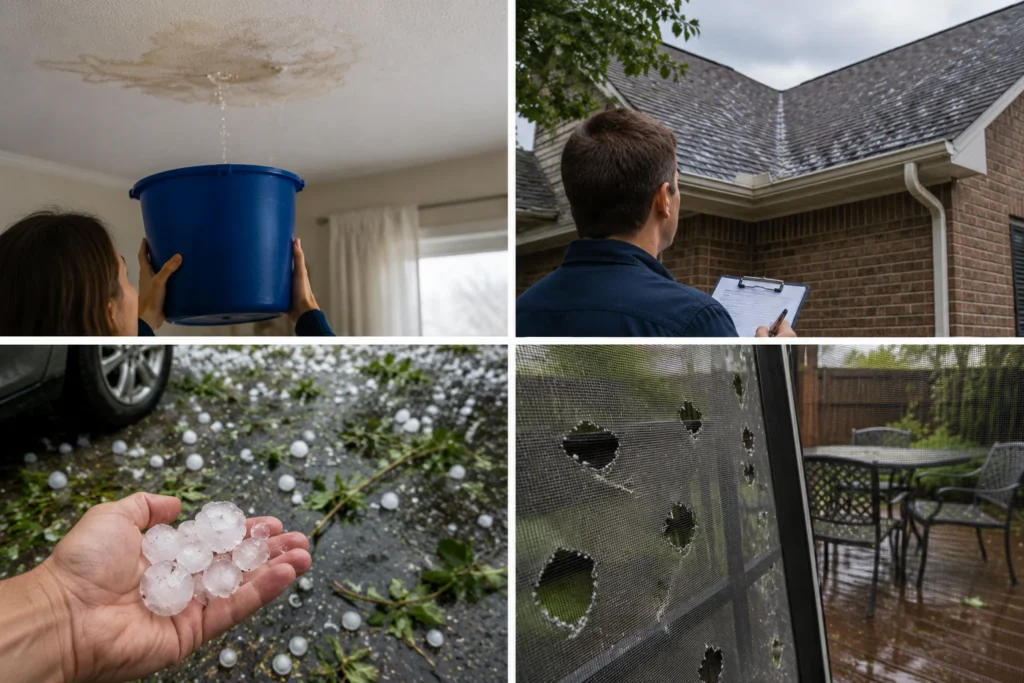
Texas homeowners know that hailstorms are not rare events. One storm can leave thousands of dollars in roof damage behind, even when the roof appears perfectly fine from the ground. That’s why understanding the roof hail damage insurance claim Texas process is so important. The faster you identify damage, document it correctly, and navigate the claim process, the better your chances of receiving a fair settlement.
I’ve seen many property owners make the same mistake. They assume no leaks mean no damage. Unfortunately, hail damage often develops quietly. Months later, a small impact point can turn into a costly repair or even a full roof replacement. This guide explains how to identify hail damage on different roofing materials, what steps to take immediately after a storm, and how to build a stronger insurance claim from day one. Homeowners in League City who understand the process before filing a claim are often in a much better position when settlement negotiations begin.
Understanding Why Hail Damage Is More Serious Than It Looks
A roof absorbs punishment every day. Sun. Wind. Rain. Heat. Then hail arrives. Unlike gradual wear, hail creates sudden impact damage. Each hailstone strikes with force, potentially compromising roofing materials, exposing underlying components, and shortening the roof’s lifespan. In engineering and materials science, repeated impacts can contribute to a phenomenon known as fatigue (material), where structural materials gradually weaken after experiencing repeated stress cycles. The challenge is that damage is not always obvious. A roof may continue functioning for months before leaks appear. By that point, proving the storm caused the damage becomes more difficult.
Several factors determine how severe hail damage becomes:
- Hail size
- Wind speed during impact
- Roof age
- Roofing material
- Existing roof condition
- Direction of the storm
Even hail smaller than a golf ball can cause significant damage under the right conditions.
How to Identify Hail Damage by Roof Type
Not all roofs respond to hail the same way. A public adjuster or roofing professional evaluates damage differently depending on the material installed. Understanding these distinctions helps homeowners recognize problems before an insurance inspection occurs.
Asphalt Shingle Roof Hail Damage
Asphalt shingles are the most common residential roofing material in Texas. They are also one of the easiest materials for hail to damage.
Signs of Hail Damage on Asphalt Shingles
Look for:
- Circular impact marks
- Soft bruised spots
- Granule loss
- Exposed fiberglass mat
- Cracked shingles
- Torn shingle edges
Think of a bruised apple. The surface may appear intact, but pressure beneath has already weakened the structure. The same thing happens with shingles. When hail strikes, it can fracture the reinforcement layer underneath while leaving minimal visible evidence.
What You Can Spot From Ground Level
Most homeowners should never climb onto a roof after a storm.
Instead, look for warning signs around the property:
- Granules accumulating in gutters
- Black spots visible on roof slopes
- Pieces of shingles on the ground
- Damaged downspouts
- Dented mailbox surfaces
- Damaged outdoor furniture
These clues often indicate that the roof absorbed similar impacts.
Why Insurers Sometimes Challenge Asphalt Damage Claims
Many claim disputes involve asphalt shingles.
Common carrier arguments include:
- Normal aging
- Manufacturing defects
- Installation issues
- Previous storm damage
- Wear and tear
Proper documentation becomes critical because the burden often shifts toward proving the hail event caused the damage.
Metal Roof Hail Damage
Metal roofs offer excellent durability. They are not indestructible. In fact, many property owners assume metal roofs cannot suffer hail damage. That assumption often creates claim problems later.
Signs of Hail Damage on Metal Roofs
Inspect for:
- Dents
- Dings
- Surface coating damage
- Scratches
- Seam separation
- Distorted fasteners
Unlike asphalt shingles, metal roofs often display visible impact marks. The issue becomes whether those dents qualify for insurance coverage.
Cosmetic Versus Functional Damage
This distinction matters. Insurance carriers frequently categorize metal roof damage as cosmetic rather than functional.
Here’s the difference:
| Cosmetic Damage | Functional Damage |
| Appearance affected | Performance affected |
| Dents only | Water resistance compromised |
| Surface imperfections | Seams or fasteners damaged |
| No leak risk | Increased leak potential |
A dented panel may seem harmless. However, if impacts affect seams, fasteners, protective coatings, or drainage systems, functional damage may exist. That can dramatically change the value of a claim.
When Replacement Becomes Necessary
Replacement may be warranted when:
- Protective coatings fail
- Panels cannot be matched
- Structural components are affected
- Water intrusion risks increase
These issues are frequently overlooked during initial inspections.
Tile Roof Hail Damage
Tile roofs present unique challenges. Concrete and clay tiles can withstand many weather events, but hail often creates damage that remains hidden until much later.
Common Signs of Tile Roof Damage
Look for:
- Cracked tiles
- Chipped edges
- Fractured corners
- Impact fractures
- Broken ridge caps
Some cracks appear obvious. Others resemble hairline fractures and are nearly impossible to identify from the ground.
Why Tile Damage Gets Missed

Tile roofs often conceal damage beneath the surface. A tile may remain in place after impact while the underlayment below suffers damage. Months later, leaks begin appearing inside the home. At that point, many homeowners struggle to connect the damage back to the hail event.
Matching Problems During Repairs
Tile matching becomes another major issue. Older tile profiles may be discontinued. Color variations may exist. Replacement pieces may not match weathered roofing materials already installed. These factors often increase repair costs and affect claim value.
Other Areas Hail Can Damage
Many homeowners focus exclusively on the roof. That is a mistake. Insurance adjusters often use collateral damage to verify storm intensity.
Pay attention to:
- Gutters
- Downspouts
- Roof vents
- Skylights
- Window screens
- Air conditioning units
- Siding
- Exterior paint
- Garage doors
Documenting these areas strengthens a hail damage on roof insurance claim because they help establish the storm’s impact across the property.
Immediate Steps to Take After a Hailstorm
The first 24 to 72 hours matter. A lot. What you do immediately after the storm can influence both the condition of your roof and the outcome of your insurance claim.
Step 1: Prioritize Safety
Safety comes first.
Avoid:
- Walking on the roof
- Climbing unstable ladders
- Entering damaged attic spaces
- Touching electrical hazards
If active leaks exist, focus on protecting interior belongings and minimizing further damage.
Step 2: Conduct a Ground-Level Inspection
Walk around the property. Take notes.
Look carefully at:
- Roof slopes
- Gutters
- Downspouts
- Window screens
- Outdoor furniture
- Vehicles
Create an initial list of visible damage. Don’t rely on memory. Storm events become surprisingly difficult to reconstruct later.
Step 3: Prevent Additional Damage
Insurance policies generally require homeowners to mitigate further loss. Temporary measures may include:
- Emergency tarping
- Placing buckets under leaks
- Covering exposed areas
- Moving valuables away from water intrusion
Keep every receipt. Those expenses may become part of your claim.
Step 4: Gather Weather Documentation
Strong claims are built on evidence.
Collect:
- Storm dates
- Local weather reports
- Hail size reports
- Radar information
- News coverage
Weather records can help establish that a significant hail event occurred at your location.
Step 5: Schedule a Professional Inspection
Many forms of hail damage require close examination. Professional inspections can identify:
- Hidden roof impacts
- Underlayment concerns
- Flashing damage
- Vent damage
- Code-related issues
This documentation becomes valuable before an insurance company prepares its estimate.
How to Document Damage for a Roof Hail Damage Insurance Claim Texas
Documentation wins claims. The strongest claims tell a story supported by evidence, photos, reports, and timelines. In fact, homeowners searching for guidance on How to Document Hail Damage for an Insurance Claim should focus on creating a complete record that includes photographs, inspection reports, weather data, contractor estimates, and all communications with the insurance company. Thorough documentation often becomes one of the most important factors in claim success. Unfortunately, many homeowners take only a handful of pictures and hope for the best. That approach leaves money on the table.
Essential Photos to Capture
Photograph everything. Then photograph it again.
Important images include:
- Entire roof elevations
- Close-up impact marks
- Damaged gutters
- Dented metal surfaces
- Broken tiles
- Interior ceiling stains
- Water intrusion points
- Exterior collateral damage
Take photos from multiple angles and distances. Wide shots establish context. Close-ups establish severity.
Create a Dedicated Claim File
Keep everything organized in one location.
Include:
- Inspection reports
- Weather reports
- Contractor estimates
- Insurance correspondence
- Repair receipts
- Temporary mitigation invoices
- Photographs and videos
Organization alone can significantly improve claim efficiency.
Use Video to Supplement Photos
Video provides context still images cannot. Narrate observations while recording.
Show:
- Roof elevations
- Property perimeter
- Damaged components
- Active leaks
The goal is to preserve evidence while conditions remain unchanged.
Why Professional Reports Matter
Insurance carriers rely heavily on documentation.
Professional reports often identify:
- Functional damage
- Code requirements
- Matching issues
- Repair limitations
- Hidden storm impacts
Those findings frequently become important later when claim disputes arise. Once damage is documented, the actual claim process begins. Many homeowners assume the insurer’s first inspection is the final word. It isn’t. The process involves multiple stages, reviews, and negotiations. Understanding those stages helps set realistic expectations and positions you for a stronger outcome.
Understanding the Insurance Claim Process
Once you file a roof hail damage insurance claim Texas, the insurance company begins its investigation. This process sounds straightforward. In reality, it can become complicated quickly. The insurance carrier assigns an adjuster to inspect the property, review the reported damages, and determine whether coverage applies under the policy.
Filing the Initial Claim
When reporting hail damage, be prepared to provide:
- Date of loss
- Property address
- Description of damage
- Photos if available
- Contact information
The sooner you report the damage, the better. Delays can create questions about whether the hailstorm actually caused the issues being claimed.
What Happens During the Insurance Inspection?
The adjuster typically examines:
- Roofing materials
- Gutters and downspouts
- Flashing
- Vents
- Skylights
- Exterior elevations
- Interior water damage
This inspection forms the foundation of the insurance estimate. However, homeowners should understand one important fact: The adjuster’s estimate is not always complete. It is simply the carrier’s initial evaluation.
Questions to Ask During the Inspection
Being present during the inspection can be valuable.
Consider asking:
- What damage has been identified?
- Are all roof slopes being inspected?
- Was collateral damage documented?
- Are code upgrades included?
- Will additional inspections be necessary?
Good questions often reveal whether critical items are being overlooked.
Understanding Actual Cash Value vs. Replacement Cost

Many Texas homeowners misunderstand this part of their policy.
| Actual Cash Value (ACV) | Replacement Cost Value (RCV) |
| Depreciation deducted | Full replacement cost covered |
| Lower initial payment | Higher total claim value |
| Based on age and condition | Based on replacement expenses |
Most replacement cost policies issue payments in stages.
The first payment reflects the actual cash value. Additional funds may become available after repairs are completed and documented.
Understanding this process helps avoid surprises.
What Insurance Companies Commonly Miss During Their Scope of Loss
One of the biggest reasons homeowners receive less than they deserve is incomplete scoping. A scope of loss outlines everything the insurer believes should be repaired or replaced. When important items are missing, the claim becomes underpaid. Unfortunately, it happens frequently.
Many policyholders are surprised when additional damages are discovered after repairs begin. This is why Hail Damage Claim Supplements: What Carriers Miss in Their Scope has become such an important topic for Texas homeowners. Initial estimates frequently overlook hidden underlayment damage, code upgrades, matching issues, and labor requirements that only become apparent during construction.
Missing Damage Across Multiple Roof Slopes
Some inspections focus only on the most visibly damaged areas. The result? Additional damaged slopes may be excluded from the estimate. A complete inspection should evaluate every elevation and roofing section.
Overlooking Collateral Damage
Collateral damage serves two purposes. First, it requires repair. Second, it supports the severity of the storm event.
Commonly missed items include:
- Gutters
- Downspouts
- Roof vents
- Flashing
- Window screens
- Garage doors
- HVAC equipment
- Metal accessories
Even minor omissions can add thousands of dollars to a claim.
Missing Underlayment Damage
Many roofs suffer impacts that extend beyond surface materials. Beneath shingles or tiles sits the underlayment. If hail compromises this protective layer, water intrusion risks increase dramatically. Underlayment issues often remain hidden until roofing materials are removed.
Ignoring Building Code Requirements
Texas municipalities may require specific upgrades when substantial roof repairs occur.
Examples include:
- Ice and water barriers
- Updated flashing systems
- Enhanced ventilation
- Fastener requirements
Failure to include code compliance costs creates funding gaps during reconstruction.
Manufacturer Installation Requirements
Roofing systems must often be repaired according to manufacturer specifications.
Those requirements can affect:
- Fasteners
- Sealants
- Underlayment
- Accessory replacement
- Matching materials
Incomplete estimates frequently overlook these details.
Underestimating Labor and Material Costs
Construction pricing changes constantly. Material inflation, labor shortages, and supply chain issues can all affect project costs. An estimate prepared months earlier may no longer reflect current market pricing. This becomes especially important for large hail losses.
The Supplement Process Explained
A supplemental claim is one of the most misunderstood parts of property insurance. Many homeowners assume the initial estimate is final. It isn’t. Supplements exist because hidden damage is often discovered after work begins.
What Is a Supplemental Insurance Claim?
A supplement requests additional compensation for damages or costs not included in the original estimate. Think of it as updating the claim based on new information. The goal is accuracy. Not exaggeration. Not inflation. Accuracy.
Common Reasons Supplements Become Necessary
Several situations trigger supplemental claims.
Hidden Damage
Roofing contractors frequently uncover:
- Damaged decking
- Compromised underlayment
- Hidden water intrusion
- Structural concerns
These conditions may not be visible during the original inspection.
Building Code Requirements
Code upgrades often become apparent during construction. If additional work is legally required, the insurer may need to adjust the claim.
Material Availability Issues
Certain roofing products become discontinued. Matching materials may no longer exist. This can affect repair feasibility and overall project costs.
Labor and Pricing Changes
Material prices can increase significantly between inspection and repair. Updated documentation helps justify necessary adjustments.
Documentation Required for Supplements
Strong supplements rely on evidence.
Typical documentation includes:
- Contractor reports
- Photos
- Invoices
- Code citations
- Manufacturer specifications
- Material pricing information
The stronger the evidence, the stronger the supplement request.
Common Mistakes During the Supplement Process
Avoid these errors:
- Beginning repairs without documentation
- Failing to photograph hidden damage
- Discarding damaged materials too early
- Missing deadlines
- Assuming the insurer already knows about new findings
Communication and documentation remain critical throughout the process.
Why a Public Adjuster Changes the Outcome
This is where many homeowners experience the biggest difference. Insurance company adjusters work for insurance companies. Public adjusters work for policyholders. That distinction matters.
What Does a Public Adjuster Do?
A public adjuster evaluates the loss independently and represents the homeowner throughout the claim process.
Responsibilities often include:
- Reviewing policy language
- Inspecting damage
- Preparing estimates
- Documenting losses
- Managing communications
- Negotiating settlements
- Handling supplements
Their focus is ensuring all covered damages are identified and properly valued. When evaluating Public Adjuster vs. Insurance Adjuster for Hail Claims in League City, TX, homeowners should understand that each professional serves a different role. The insurance adjuster represents the carrier’s interests during the claim process, while a public adjuster works exclusively for the policyholder and focuses on identifying, documenting, and negotiating all covered damages.
Public Adjuster vs. Insurance Adjuster
| Public Adjuster | Insurance Company Adjuster |
| Represents homeowner | Represents insurer |
| Advocates for policyholder | Protects carrier interests |
| Reviews complete damages | Reviews carrier scope |
| Negotiates for full value | Controls claim payments |
This difference often affects claim outcomes significantly.
How Public Adjusters Identify Missed Damage
Experience matters. Public adjusters know where storm damage commonly hides.
They routinely identify:
- Additional roof impacts
- Code-related costs
- Interior damage
- Matching issues
- Collateral damage
- Construction requirements
Many of these items contribute directly to claim value.
Building Stronger Documentation
Documentation wins disputes.
A public adjuster helps assemble:
- Detailed photo evidence
- Inspection reports
- Scope comparisons
- Contractor findings
- Policy support documentation
This creates a much stronger claim package.
Negotiating With the Insurance Carrier
Negotiation is a major component of claim resolution. Insurers review evidence. Adjusters review estimates. Additional documentation gets submitted. Disagreements get addressed. Throughout this process, a public adjuster serves as the homeowner’s advocate.
When Hiring a Public Adjuster Makes the Most Sense
While every situation differs, representation often becomes especially valuable when:
- Damage is extensive
- Claims are denied
- Estimates appear low
- Multiple structures are involved
- Supplements become necessary
- Policy language becomes complicated
Large hail losses often involve all of these factors.
How Homeowners in League City Benefit From Professional Representation
Severe weather is part of life on the Texas Gulf Coast. When major hailstorms strike, homeowners in League City often face substantial roofing losses, complicated claim procedures, and conflicting repair opinions. Professional representation helps level the playing field.
Rather than navigating the process alone, homeowners gain an advocate focused entirely on protecting their interests. Not every claim receives immediate approval. Homeowners researching What to Do If Your Hail Claim Was Denied in League City, TX should begin by requesting a detailed explanation for the denial, reviewing the policy language, gathering additional supporting evidence, and obtaining independent inspections when necessary. In many situations, supplemental documentation or professional representation can help challenge an unfavorable decision.
Protect Your Roof and Protect Your Claim
Hail damage can be deceptive. A roof may look perfectly fine after a storm while hidden impacts quietly shorten its lifespan. That’s why immediate action matters. Inspect the property. Document everything. Preserve evidence. Gather weather information. Schedule a professional inspection. Most importantly, understand that the first insurance estimate is not always the final answer. A properly prepared hail damage on roof insurance claim often identifies damages that initial inspections overlook. Supplements frequently uncover additional costs. Public adjusters frequently discover missing scope items that affect settlement value.
Whether your roof is asphalt, metal, or tile, knowing how damage occurs puts you in a stronger position from the start. For homeowners facing a roof hail damage insurance claim Texas, preparation can make the difference between a frustrating experience and a successful recovery. If your property in League City has recently experienced hail, take the process seriously. The decisions made during the first few days often influence the entire claim.
Your roof protects your home every day. Make sure your insurance claim protects your investment with the same level of care. And if challenges arise, homeowners throughout League City should remember that experienced public adjusters can help ensure no covered damage gets left behind.
Conclusion
A successful hail roof damage insurance claim begins long before repairs start. It begins with understanding how hail affects different roofing systems, recognizing damage early, documenting every detail, and knowing how the insurance process works.
The most effective homeowners don’t simply wait for the insurance company to tell them what their claim is worth. They gather evidence, ask questions, verify estimates, and pursue supplements when additional damage is discovered. By taking a proactive approach, you can protect your roof, strengthen your claim, and maximize your recovery after a hailstorm. When handled correctly, a roof hail damage insurance claim Texas becomes more than a paperwork process it becomes a strategy for restoring your property properly and protecting its long-term value.
FAQs
Look for bruised shingles, granule loss, dents on metal surfaces, cracked tiles, and damage to gutters or vents.
Yes. Hail damage can weaken roofing materials long before leaks become visible inside the home.
The deadline depends on your policy, but it is generally best to report damage as soon as possible after the storm.
Yes. Hail can dent panels, damage protective coatings, and compromise seams or fasteners.
Save photos, inspection reports, repair estimates, weather reports, receipts, and all communication with the insurer.
Some damage remains hidden until repairs begin, while other items may be overlooked during a limited inspection.
A supplement requests additional payment for covered damage or costs not included in the original estimate.
In some cases, yes. New evidence, additional inspections, or professional representation may support reconsideration.
A public adjuster can identify overlooked damages and negotiate on your behalf for a more accurate claim valuation.
Asphalt shingles typically show damage more easily, but metal, tile, and other roofing systems can also suffer significant hail impacts.